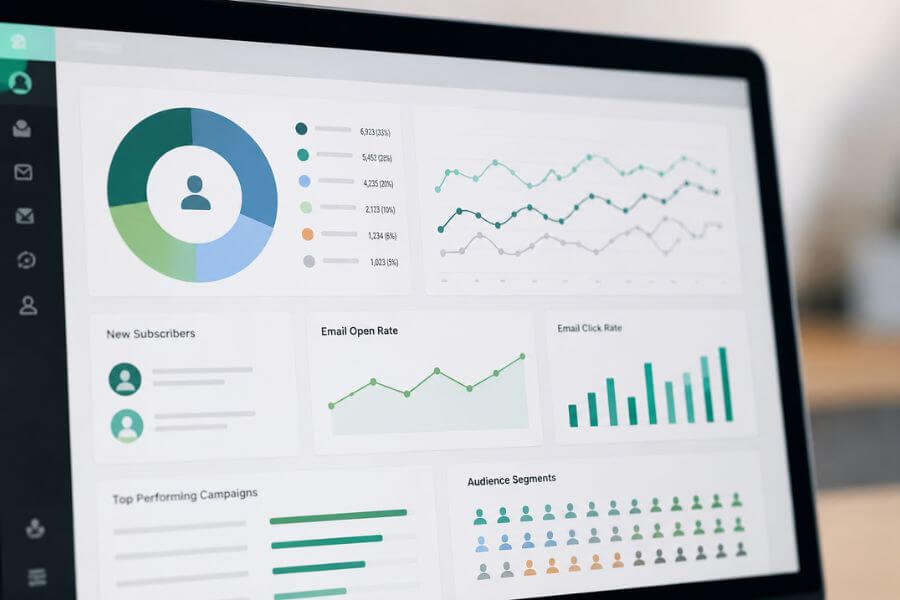
If you run an e-commerce business, sending the same email to every customer is no longer enough. Modern shoppers expect personalized experiences based on what they browse, buy, and abandon in their carts. While Mailchimp remains a popular email marketing platform, many online store owners eventually need more advanced segmentation, automation, and customer targeting features.
The best Mailchimp alternatives help you create highly targeted campaigns that increase open rates, improve conversions, and boost customer retention. Whether you sell through Shopify, WooCommerce, BigCommerce, or multiple sales channels, the right platform can help you deliver the right message to the right customer at the right time.
In this guide, you’ll discover the 12 best Mailchimp alternatives for advanced e-commerce email segmentation and learn which platform fits your business goals.
Quick Summary Table
| Platform | Best For | Advanced Segmentation | Automation Strength | E-commerce Focus |
|---|---|---|---|---|
| Klaviyo | Growing online stores | Excellent | Excellent | Excellent |
| Omnisend | Multi-channel marketing | Excellent | Excellent | Excellent |
| ActiveCampaign | Deep customer journeys | Excellent | Excellent | Very Good |
| Drip | E-commerce personalization | Excellent | Excellent | Excellent |
| Brevo | Budget-conscious businesses | Very Good | Very Good | Good |
| GetResponse | Marketing automation | Very Good | Very Good | Good |
| ConvertKit | Creators selling products | Good | Very Good | Moderate |
| HubSpot Marketing Hub | Enterprise marketing | Excellent | Excellent | Very Good |
| Campaign Monitor | Visual campaign building | Very Good | Good | Good |
| MailerLite | Simplicity and affordability | Good | Good | Moderate |
| Constant Contact | Small businesses | Good | Good | Moderate |
| Moosend | Cost-effective automation | Very Good | Very Good | Good |
How We Ranked These Platforms
We evaluated each platform using the following key factors:
- Quality of customer segmentation tools
- E-commerce integration capabilities
- Behavioral tracking features
- Automation workflow flexibility
- Cart abandonment functionality
- Product recommendation capabilities
- Ease of use for beginners
- Reporting and analytics depth
- Pricing value for growing stores
- Customer support quality
- Multi-channel marketing options
- Scalability for larger businesses
1. Klaviyo
Klaviyo has become one of the most popular email marketing platforms for e-commerce businesses, and for good reason. It was built specifically for online stores and provides some of the most advanced segmentation capabilities available.
You can create highly detailed customer segments based on purchase history, browsing behavior, average order value, product categories, customer lifetime value, and dozens of other data points. This allows you to build campaigns that feel highly personalized.
One of Klaviyo’s biggest strengths is its ability to combine real-time customer behavior with automated workflows. For example, you can automatically send emails to customers who viewed a specific product multiple times but never completed a purchase.
Key strengths:
- Advanced behavioral segmentation
- Powerful Shopify integration
- Predictive analytics
- Dynamic product recommendations
- Detailed customer profiles
Klaviyo is particularly suitable if your store relies heavily on customer data and personalized marketing.
2. Omnisend
Omnisend is designed specifically for e-commerce businesses that want to combine email, SMS, and push notifications within a single platform.
Its segmentation engine allows you to group customers based on shopping behavior, purchase frequency, order value, location, and engagement history. You can then use these segments across multiple marketing channels.
The platform includes pre-built automation templates for:
- Cart abandonment
- Welcome sequences
- Product recommendations
- Re-engagement campaigns
- Post-purchase follow-ups
For online retailers seeking a dedicated e-commerce marketing solution, Omnisend offers an excellent balance between advanced features and usability.
3. ActiveCampaign
ActiveCampaign is widely recognized for its sophisticated automation capabilities. While it serves many industries, its segmentation and workflow tools make it especially valuable for e-commerce businesses.
The platform allows you to create customer journeys that adapt based on individual actions. You can combine behavioral data, purchase information, email engagement, and website interactions to build extremely precise audience segments.
Benefits include:
- Conditional automation workflows
- Dynamic content personalization
- CRM integration
- Lead scoring capabilities
- Advanced customer tracking
If your marketing strategy involves complex customer journeys, ActiveCampaign is one of the strongest Mailchimp alternatives available.
4. Drip
Drip focuses almost entirely on e-commerce marketing, making it a favorite among online store owners who need detailed customer segmentation.
The platform excels at tracking customer activity across your website and automatically triggering relevant campaigns based on those actions.
Drip makes it easy to target:
- First-time buyers
- Repeat customers
- High-value customers
- Customers who abandoned carts
- Product category shoppers
Its visual workflow builder helps you design sophisticated customer journeys without needing technical expertise.
For stores that prioritize personalized customer experiences, Drip remains a strong contender.
5. Brevo
Brevo offers a versatile marketing platform that combines email marketing, automation, SMS campaigns, and customer relationship management features.
Its segmentation tools allow you to organize contacts based on demographics, engagement levels, purchase history, and custom attributes.
Advantages include:
- Competitive pricing
- User-friendly dashboard
- Multi-channel communication
- Marketing automation features
- CRM functionality
Brevo works particularly well for small and medium-sized businesses that need strong segmentation without enterprise-level costs.
6. GetResponse
GetResponse has evolved far beyond traditional email marketing. Today, it includes automation, segmentation, sales funnels, webinars, and e-commerce tools.
Its segmentation features allow you to target customers based on:
- Purchase behavior
- Email interactions
- Website activity
- Geographic location
- Customer preferences
The platform’s automation builder helps businesses create personalized workflows that guide customers through the buying process.
GetResponse is a good choice if you want a broader marketing toolkit beyond email alone.
7. ConvertKit
ConvertKit is known for serving creators, but it has expanded its capabilities to support businesses selling digital and physical products.
Its tagging system provides flexible segmentation options that allow you to organize subscribers based on actions and interests.
Strengths include:
- Easy-to-use automation builder
- Subscriber tagging system
- Personalized email sequences
- Landing page tools
- Commerce features
Although it may not be as e-commerce-focused as Klaviyo or Omnisend, ConvertKit remains a useful solution for content-driven brands.
8. HubSpot Marketing Hub
HubSpot Marketing Hub combines email marketing, customer relationship management, automation, and analytics within a single ecosystem.
Its segmentation capabilities are among the most advanced on the market. Businesses can create detailed customer audiences using virtually any customer data available in the platform.
Notable features include:
- Unified customer database
- Advanced automation workflows
- Deep reporting capabilities
- Sales and marketing alignment
- Personalized customer experiences
HubSpot is particularly attractive for larger businesses that want a comprehensive marketing infrastructure.
9. Campaign Monitor
Campaign Monitor offers strong email marketing capabilities with an emphasis on design and customer engagement.
Its segmentation tools allow marketers to create targeted campaigns based on customer activity, purchase behavior, and engagement metrics.
Benefits include:
- Beautiful email templates
- Simple segmentation tools
- Automated customer journeys
- Detailed reporting
- Strong user experience
Campaign Monitor is a practical option for businesses that prioritize visually appealing email campaigns.
10. MailerLite
MailerLite has built a reputation for affordability and simplicity while still providing useful segmentation and automation features.
Users can create audience segments based on:
- Subscriber behavior
- Purchase history
- Email engagement
- Custom fields
The platform also includes automation workflows, landing pages, forms, and reporting tools.
For smaller e-commerce businesses seeking value and ease of use, MailerLite deserves consideration.
11. Constant Contact
Constant Contact has long been a trusted email marketing solution for small businesses.
While its segmentation tools are not as advanced as some competitors, they remain effective for businesses that need straightforward audience targeting.
Key features include:
- Easy campaign creation
- Customer segmentation
- Automation tools
- Reporting dashboards
- E-commerce integrations
The platform is best suited for businesses that prefer simplicity over extensive customization.
12. Moosend
Moosend combines affordability with surprisingly powerful automation and segmentation capabilities.
The platform allows marketers to build detailed audience segments based on customer actions, engagement patterns, and purchase history.
Highlights include:
- Visual automation builder
- AI-powered recommendations
- Behavioral targeting
- Cart abandonment workflows
- Affordable pricing structure
Moosend is often overlooked but offers excellent value for growing online stores that need advanced marketing tools without a large budget.
Conclusion
Choosing the best Mailchimp alternative depends on your business size, marketing goals, and customer segmentation needs.
If advanced e-commerce segmentation is your top priority, Klaviyo, Omnisend, Drip, and ActiveCampaign stand out as the strongest options. These platforms provide deep customer insights, behavioral targeting, and sophisticated automation workflows that help you deliver highly relevant messages to shoppers.
For businesses seeking affordability, Brevo, MailerLite, and Moosend offer impressive functionality at lower price points. Meanwhile, HubSpot Marketing Hub serves organizations that need a complete marketing ecosystem rather than email marketing alone.
The most effective email marketing platform is the one that helps you understand your customers better and deliver personalized experiences that drive sales. Investing in stronger segmentation capabilities can lead to higher engagement, improved customer loyalty, and increased revenue over time.
Frequently Asked Questions
What makes e-commerce email segmentation different from regular email segmentation?
E-commerce email segmentation focuses heavily on shopping behavior, purchase history, cart activity, product preferences, and customer lifetime value. Traditional email segmentation often relies more on demographic information and general engagement metrics.
Can I migrate my subscriber list from Mailchimp to another platform?
Yes. Most email marketing platforms provide import tools that allow you to transfer subscribers, tags, segments, and sometimes even automation workflows from Mailchimp. The migration process is typically straightforward, although some manual adjustments may be required.
Which Mailchimp alternative is best for Shopify stores?
Klaviyo and Omnisend are often considered among the strongest options for Shopify users because they provide deep integration, real-time customer tracking, advanced segmentation, and specialized e-commerce automation features.
Do advanced segmentation tools improve email conversion rates?
In many cases, yes. Better segmentation allows you to send more relevant content to specific customer groups. Personalized campaigns often generate higher open rates, click-through rates, and sales compared to broad email blasts.
Should small e-commerce businesses use advanced segmentation from the beginning?
Small businesses can benefit from basic segmentation immediately, such as separating new customers, repeat buyers, and abandoned cart users. As your customer base grows, more advanced segmentation can help improve marketing performance and customer retention.