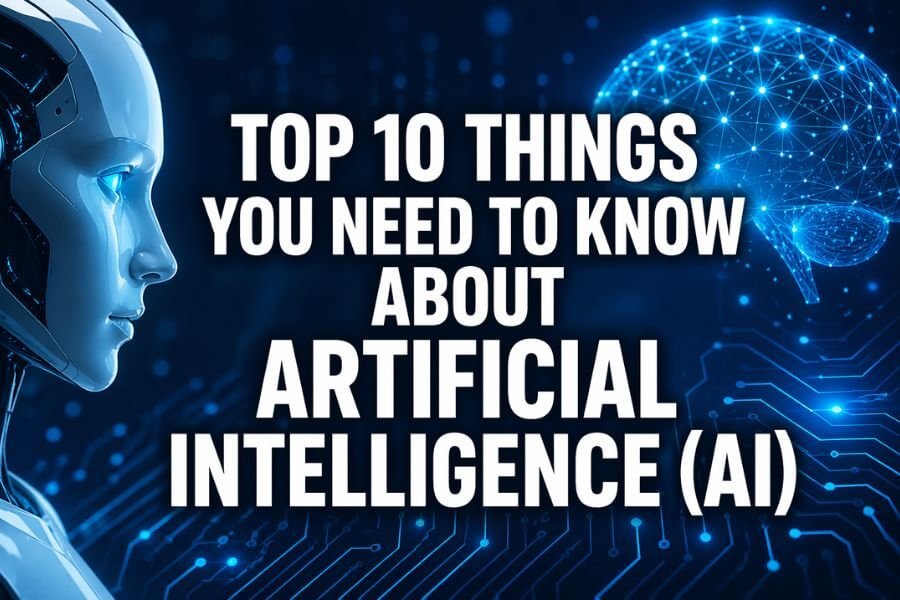
Artificial Intelligence, often called AI, is changing the way you live, work, and interact with the world. From the apps on your phone to the systems that power businesses, AI is becoming a part of everyday life faster than ever before. You might already be using AI without even realizing it. Understanding how it works and what it means for you can help you stay informed, make better decisions, and even prepare for future opportunities. In this guide, you will learn the most important things about AI in simple and clear terms so you can feel confident navigating this fast-growing technology.
1. What Artificial Intelligence Really Means
Artificial Intelligence refers to machines or software that can perform tasks that usually require human intelligence. These tasks include learning from data, recognizing patterns, making decisions, and even understanding language. Instead of following simple instructions, AI systems can improve over time by analyzing information. When you use voice assistants, recommendation systems, or translation tools, you are interacting with AI. It is not magic or science fiction, but a technology built on data and algorithms that aim to mimic human thinking in specific ways.
2. AI Is Already Part of Your Daily Life
You do not need to work in tech to experience AI because it is already everywhere around you. Many tools and services you use every day rely on AI to function better and faster. For example:
- Streaming platforms suggest movies and shows based on your past viewing habits
- Online stores recommend products based on what you browse or buy
- Navigation apps find the fastest routes by analyzing traffic patterns
- Email services filter spam messages automatically
These everyday uses show how AI quietly improves your experience without requiring you to understand the complex systems behind it.
3. AI Learns From Data, Not From Thinking Like Humans
One common misunderstanding is that AI thinks like a human. In reality, AI learns from data. It studies large amounts of information and identifies patterns to make predictions or decisions. For example, if an AI is trained to recognize images of cats, it does not understand what a cat is in a human sense. Instead, it learns patterns like shapes, textures, and colors from thousands of examples. This means the quality of AI depends heavily on the data it is trained on. Good data leads to better results, while poor data can cause mistakes.
4. There Are Different Types of AI
Not all AI is the same. It can be grouped into different types based on its abilities. Understanding these types can help you see what AI can and cannot do.
- Narrow AI: Designed for a specific task, like voice assistants or recommendation systems
- General AI: A more advanced concept where machines can perform any intellectual task like humans
- Super AI: A theoretical stage where AI surpasses human intelligence
Most AI you interact with today is narrow AI. It is powerful but limited to specific functions and does not have true understanding or awareness.
5. AI Is Transforming Jobs and Industries
AI is changing how work is done across many industries. Some tasks are becoming faster and more efficient, while others are being automated. This does not mean jobs will disappear completely, but they will evolve. You may notice:
- Repetitive tasks being handled by machines
- New roles being created that focus on managing or improving AI systems
- Increased demand for digital and technical skills
To stay competitive, you should focus on learning skills that work alongside AI, such as problem-solving, creativity, and communication.
6. AI Can Make Mistakes and Has Limits
Even though AI is powerful, it is not perfect. It can make mistakes, especially if the data it learns from is incomplete or biased. AI does not have common sense or emotions, so it cannot fully understand context the way humans do. For example, a chatbot might misunderstand a question or give incorrect information if it has not been trained properly. This is why human oversight is still important when using AI systems, especially in critical areas like healthcare, finance, or law.
7. Data Privacy and Security Are Important
AI systems rely on large amounts of data, and this raises concerns about privacy and security. When you use AI-powered services, your data may be collected and analyzed to improve performance. It is important to be aware of how your data is used and to choose services that protect your information. You should:
- Read privacy policies carefully
- Avoid sharing sensitive information unnecessarily
- Use strong passwords and security settings
Being careful with your data helps you stay safe while enjoying the benefits of AI.
8. AI Is Driving Innovation and New Technology
AI is not just improving existing tools but also creating entirely new possibilities. It is helping scientists, engineers, and businesses solve complex problems faster than ever before. Some exciting areas include:
- Healthcare: AI helps doctors detect diseases earlier and develop treatments
- Transportation: Self-driving technology is being developed to improve safety
- Education: Personalized learning tools adapt to your pace and style
- Finance: AI helps detect fraud and manage investments
These innovations show how AI is shaping the future in ways that can benefit society as a whole.
9. Ethical Concerns Around AI Are Growing
As AI becomes more powerful, ethical concerns are becoming more important. Questions about fairness, bias, and responsibility are being discussed around the world. For example, if an AI system makes a wrong decision, who is responsible? If AI is trained on biased data, it can produce unfair results. Governments, companies, and experts are working to create rules and guidelines to ensure AI is used responsibly. As a user, being aware of these issues helps you make informed choices and support ethical use of technology.
10. You Can Start Learning AI Without Being an Expert
You do not need to be a programmer to start understanding AI. There are many ways you can learn about it at your own pace. You can explore:
- Online courses and tutorials
- Simple AI tools and apps
- Articles and videos that explain concepts in easy terms
By taking small steps, you can build your knowledge over time. Understanding AI can open new opportunities for your career and help you adapt to a rapidly changing world.
Conclusion
Artificial Intelligence is no longer a distant idea but a reality that is shaping your daily life and future. By understanding what AI is, how it works, and where it is used, you can better prepare yourself for the changes it brings. While AI offers many benefits, it also comes with challenges such as privacy concerns and ethical questions. The key is to stay informed, use AI responsibly, and continue learning as the technology evolves. When you understand AI, you are not just keeping up with the future; you are becoming part of it.
Frequently Asked Questions
What is the difference between AI and machine learning?
AI is the broader concept of machines performing tasks that require intelligence, while machine learning is a specific part of AI that focuses on systems learning from data and improving over time without being directly programmed for every task.
Can AI replace human creativity?
AI can assist with creative tasks, but it cannot fully replace human creativity. It lacks emotions, personal experiences, and true imagination, which are important parts of creative thinking.
Is AI dangerous to humans?
AI itself is not dangerous, but how it is used can create risks. Proper rules, ethical guidelines, and human oversight are important to ensure AI is used safely and responsibly.
Do you need coding skills to work with AI?
Not always. While coding can help, many roles related to AI focus on strategy, design, or data analysis. There are also user-friendly tools that allow you to use AI without programming knowledge.
How will AI affect your future?
AI will likely change how you work, learn, and interact with technology. It can create new opportunities, improve efficiency, and make everyday tasks easier, but it also requires you to adapt and keep learning new skills.