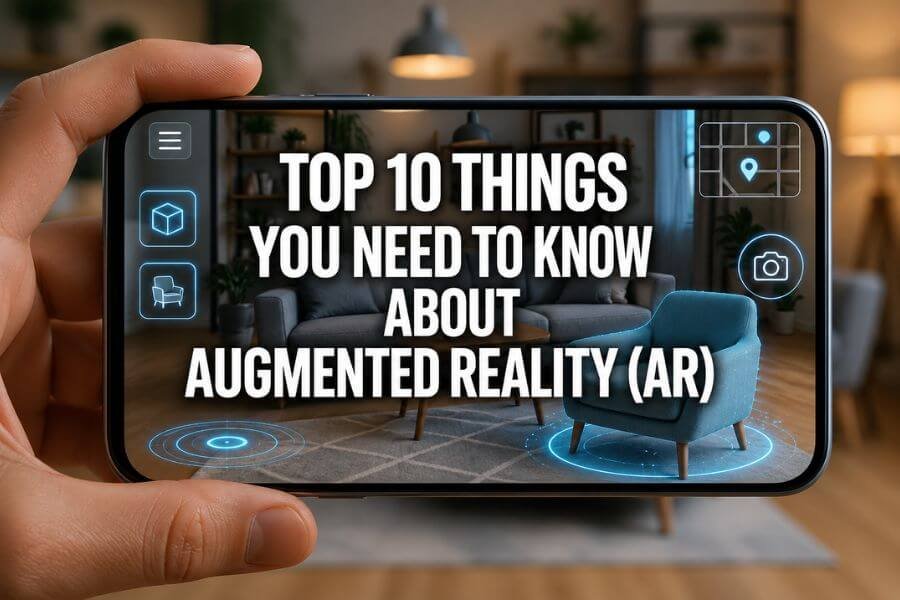
Augmented Reality, often called AR, is changing the way you see and interact with the world around you. Instead of replacing reality, AR adds digital elements on top of your real environment using devices like smartphones, tablets, or smart glasses. You may have already used AR without even realizing it, whether through social media filters, mobile games, or shopping apps that let you preview products in your space. As AR continues to grow, it is becoming an important part of everyday life, business, education, and entertainment. In this guide, you will learn the most important things you need to know about AR so you can understand how it works and how it can benefit you.
1. What Augmented Reality (AR) Really Means
Augmented Reality is a technology that overlays digital content onto your real-world view. Unlike virtual reality, which creates a fully digital environment, AR keeps you connected to your surroundings while adding useful or fun visual elements. When you use AR, your device uses a camera, sensors, and software to detect your environment and place digital objects in it. This can include images, animations, text, or even interactive 3D models. The goal of AR is to enhance your real-world experience instead of replacing it.
2. How AR Technology Works
To understand AR better, you should know how it works behind the scenes. AR systems rely on a combination of hardware and software to function smoothly. Your device captures the real world through a camera, then software analyzes the environment using technologies like computer vision and depth tracking. After that, digital objects are placed accurately within the scene so they appear as if they exist in the real world. Key components include:
- Camera and sensors to detect surroundings
- Processing power to analyze data in real time
- Display to show the combined real and digital view
- AR software platforms that manage interactions
This process happens almost instantly, which is why AR feels seamless when you use it.
3. The Difference Between AR and VR
It is easy to confuse AR with virtual reality, but they are very different. AR enhances your real environment, while virtual reality creates a completely digital world that replaces your surroundings. With AR, you can still see your room, your desk, or the street around you. With virtual reality, you are fully immersed in a computer-generated environment. This difference makes AR more flexible and easier to use in daily life because you do not need special headsets in most cases. Your smartphone is often enough to experience AR.
4. Devices That Support AR
You do not need expensive equipment to use AR. In fact, most modern smartphones and tablets already support AR features. These devices use built-in cameras and sensors to deliver AR experiences. However, there are also specialized devices designed for more advanced use. These include:
- Smart glasses that overlay digital content directly in your field of view
- AR headsets for industrial and professional use
- Tablets with enhanced sensors for better tracking
As technology improves, AR devices are becoming smaller, lighter, and more powerful, making them easier for you to use in everyday situations.
5. Popular Uses of AR Today
AR is already part of many industries and daily activities. You might use it for entertainment, shopping, or even learning. Some of the most common uses include:
- Gaming experiences that blend digital characters with real environments
- Social media filters that add effects to photos and videos
- Retail apps that let you try furniture or clothes virtually
- Navigation tools that show directions in real-world views
- Education apps that bring lessons to life with 3D models
These applications show how AR can make everyday tasks more interactive and engaging for you.
6. AR in Business and Marketing
Businesses are quickly adopting AR to improve customer experiences and boost sales. If you run a business or work in marketing, AR can help you stand out from competitors. For example, retailers use AR to let customers preview products before buying. This reduces uncertainty and increases confidence in purchases. Marketing campaigns also use AR to create interactive ads that capture attention and encourage engagement. Some benefits of AR in business include:
- Better product visualization
- Increased customer engagement
- Higher conversion rates
- More memorable brand experiences
As a result, AR is becoming a powerful tool for companies looking to connect with customers in new ways.
7. AR in Education and Training
AR is transforming how you learn and practice skills. Instead of reading about a concept, you can see it in action through interactive visuals. This makes learning more engaging and easier to understand. For example, students can explore 3D models of the human body, historical landmarks, or scientific processes. In professional training, AR can simulate real-world scenarios, allowing you to practice safely without risks. This is especially useful in fields like healthcare, engineering, and aviation. AR helps you learn faster and remember information better by making lessons more visual and interactive.
8. Advantages of Augmented Reality
AR offers many benefits that make it valuable for both personal and professional use. When you use AR, you gain a more interactive and immersive experience without losing connection to the real world. Some key advantages include:
- Enhanced understanding through visual learning
- Improved decision-making with real-time information
- Increased engagement and user satisfaction
- Convenience and ease of use on common devices
- Ability to combine digital and physical experiences
These advantages make AR a versatile technology that can improve how you work, learn, and play.
9. Challenges and Limitations of AR
While AR has many benefits, it also comes with challenges that you should be aware of. One major issue is the need for strong hardware and processing power, which can affect performance on older devices. Privacy is another concern because AR apps often use cameras and collect data about your surroundings. Additionally, creating high-quality AR content can be expensive and time-consuming for developers. Other limitations include:
- Battery consumption on mobile devices
- Limited accuracy in some environments
- Dependence on good lighting conditions
- Potential distractions in real-world situations
Understanding these challenges helps you use AR more responsibly and effectively.
10. The Future of Augmented Reality
The future of AR looks very promising, and you can expect it to become a bigger part of your daily life. As technology advances, AR experiences will become more realistic, faster, and more accessible. Smart glasses may replace smartphones for certain tasks, allowing you to interact with digital content hands-free. AR will also play a major role in areas like remote work, healthcare, and smart cities. You may soon use AR for:
- Virtual meetings with real-time visual overlays
- Advanced navigation systems in cars and cities
- Personalized shopping experiences
- Interactive home design and planning
As AR continues to evolve, it will open up new possibilities that change how you interact with the world.
Conclusion
Augmented Reality is more than just a trend. It is a powerful technology that is shaping the future of how you live, work, and interact with your environment. By combining digital content with the real world, AR creates experiences that are both useful and engaging. From everyday applications like social media filters to advanced uses in business and education, AR is becoming an essential part of modern life. As you become more familiar with AR, you will start to see new opportunities to use it in ways that improve your daily experiences and help you stay ahead in a rapidly changing digital world.
Frequently Asked Questions
What is the main purpose of augmented reality?
The main purpose of augmented reality is to enhance your real-world experience by adding digital elements such as images, text, or 3D objects. It helps you interact with information in a more visual and engaging way.
Do you need special equipment to use AR?
In most cases, you do not need special equipment because many smartphones and tablets already support AR. However, advanced experiences may require smart glasses or AR headsets.
Is augmented reality safe to use?
AR is generally safe when used responsibly. However, you should be careful when using it in public spaces or while moving, as it can distract you from your surroundings.
How is AR used in everyday life?
AR is used in many everyday situations such as gaming, shopping, navigation, and social media. It allows you to interact with digital content while staying connected to the real world.
Will AR replace smartphones in the future?
AR may change how you use technology, but it is unlikely to completely replace smartphones soon. Instead, it may work alongside them or evolve into new types of devices like smart glasses.